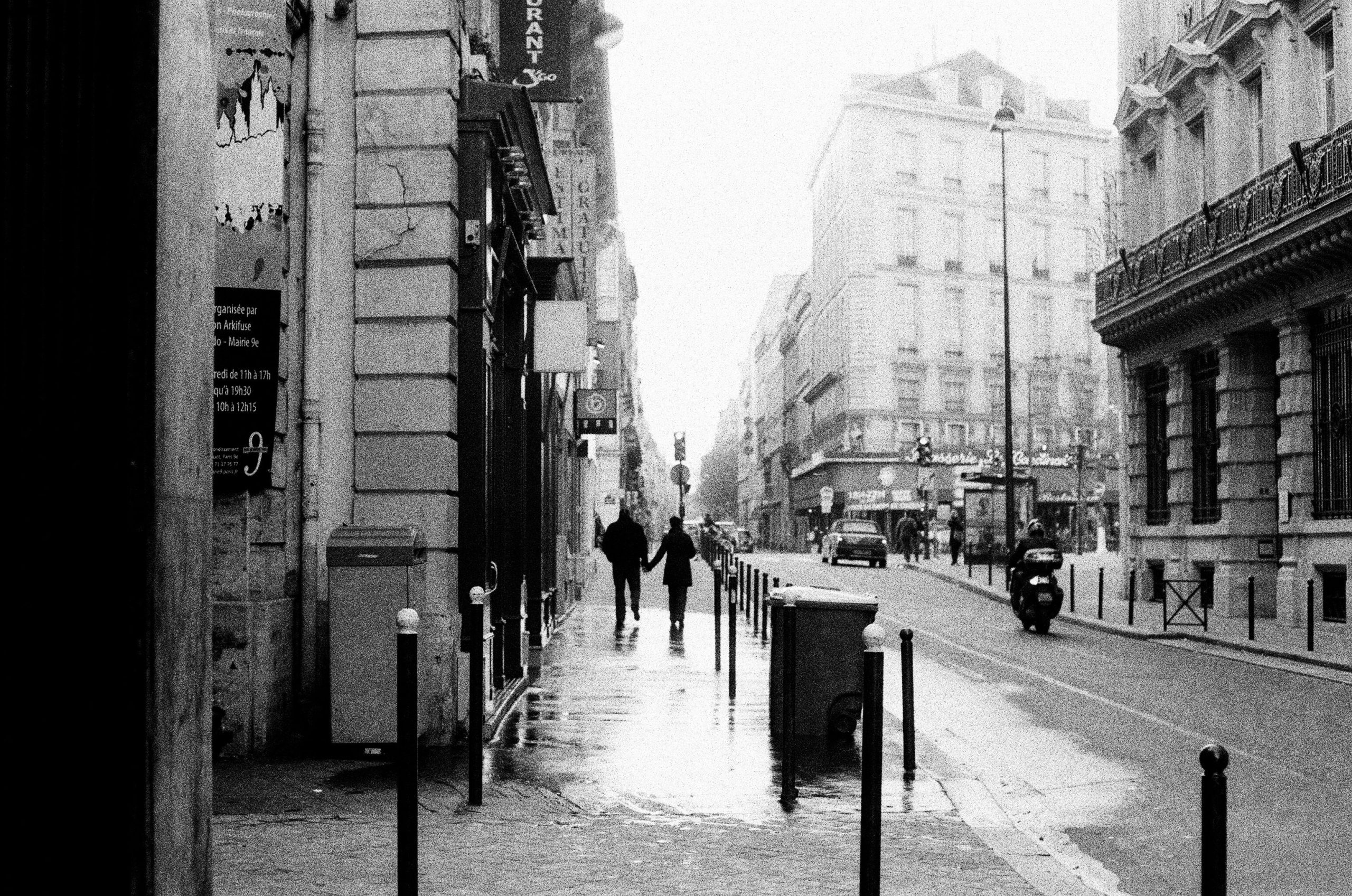
Analyzing “Rider on the Rain” (Le Passager de la Pluie, 1970): A Critical Perspective
“Rider on the Rain,” directed by René Clément, is a film that blends psychological thriller elements with a noir aesthetic, often drawing homage to Alfred Hitchcock’s storytelling techniques. While the film exhibits notable cinematic craftsmanship, certain plot details and character choices raise questions regarding their plausibility and coherence within the story’s context. This article aims to critically analyze some of these inconsistencies from a narrative and thematic standpoint.
Ownership of Unusual Vehicles in a Small French Town
One point of curiosity is the presence of a Chevrolet Impala station wagon owned by a young couple residing in a small town in Southern France. Given the historical and economic context, American cars such as the Impala were rare imports, often hampered by high import duties and fuel inefficiency, particularly suitable for wide American roads rather than narrow French streets. Moreover, the Impala in question is a practical family vehicle, yet the couple does not appear to have children. If the husband sought to showcase affluence with an American automobile, a Cadillac or Mustang might have been more representative of status, though such choices would risk social vulgarity in a region where local brands like Renault, Citroën, and Peugeot predominate. Interestingly, the Impala’s practicality could lend itself to an adverse purpose: disposal of bodies, adding a layer of sinister symbolism to the vehicle’s presence.
Questionable Weapon Ownership and Usage
The film introduces a collection of firearms owned by Mellie, despite her asserting that hunting is nonexistent in their locale. This discrepancy suggests either an inconsistency in character background or a deliberate narrative choice to imply concealed activities or preparedness for violence. The ownership of guns without hunting rights raises questions about motives and character backstory, deserving of further exploration.
Incidents During the Assault: A Logical Flaw?
A particularly perplexing moment occurs during a violent assault where the perpetrator remains in the victim’s home after the attack. While it could be assumed he intends further criminal acts, his prolonged presence seems indiscriminate and nonsensical. This behavior appears to serve cinematic convenience rather than logical consistency, providing Mellie with an unanticipated opportunity to locate and arm herself with a shotgun. Notably, the weapon is misidentified by another character as a rifle—a potentially trivial detail but one that could be clarified, especially given the military background attributed to Dobbs. Accurate terminology would enhance the narrative’s credibility.
Character Decisions and Underworld Engagement
Mellie’s decision to travel to Paris after the incident, believing another woman has been wrongfully accused of her own crime, prompts questions about her motivations and psychological state. Her fragile demeanor does not seemingly warrant venturing into the dangerous criminal underworld, raising doubts about narrative plausibility. Such a move could be scrutinized as a plot device facilitating plot development rather than a logical step dictated by character consistency.
The Omniscient Character: A Narrative Convenience?
Lastly, Dobbs’s seemingly all-knowing nature introduces an element of narrative convenience. His ability to anticipate events and possess critical knowledge may detract from the story’s realism, potentially serving as a device to propel the plot forward or to establish his character as an omniscient figure within the film’s universe.
Conclusion
“Rider on the Rain” remains a film appreciated for its stylistic elements and homage to Hitchcockian suspense. However, certain plot elements and character decisions appear to challenge logical consistency. These inconsistencies should be viewed within the context of cinematic storytelling—where narrative tension often takes precedence over strict plausibility—but they also invite viewers to critically examine the film’s construction and thematic underpinnings.
References:
– Clément, René. “Rider on the Rain” (Le Passager de la Pluie, 1970).
– Cinematic analysis and critical perspectives on 1970s European thrillers.
About the Author